ade

Akron, Ohio

No matter what type of home you're looking for, Akron, OH has something to offer. Akron has an eclectic mix of neighborhoods and home styles available, there's something for everyone, and with the recent drop in housing prices, there's never been a better time to buy real estate! When you find your perfect home or condo in Akron you can begin the exciting task of decorating it. New trends range from wall paper accent walls to contemporary bathroom vanities

For renters and condo buyers, try downtown. Whether you're looking to live there yourself or make an investment in real estate, you can't go wrong with downtown. Close to civic buildings, financial centers, hospitals, and parks, downtown Akron, OH is the place for movers and shakers.

For the outdoorsy there are the historic homes and nature trails of Elizabeth Valley Park, built on the restored banks of the Ohio and Erie Canal. Real estate in this area has the historic feel of old America that you just won't want to pass up.

If you're looking to raise a family, try the spacious homes and large lots of Fairlawn Heights, or the predominantly single-family homes of Kenmore and Northwest Akron.

If you're looking for a budget home in a tight-knit community, try Firestone Park or Goodyear Heights. Originally established as company housing during the industrial boom, both neighborhoods now boast an impressive array of community parks and services.

Students, artists, and those with more eclectic tastes will find themselves at home in Merriman Valley or Highland Square. Merriman Valley is known for it's niche-appeal shops and wide range of available home styles, while Highland Square's reputation for activism and progressive values have made it one of Akron, Ohio's most famous neighborhoods.

Akron, Ohio
Akron, Ohio
Akron, Ohio
Akron, Ohio
Akron, Ohio
Akron, Ohio
Akron, Ohio

Read more...

Zaragoza Expo

Walking downtown Zaragoza, Spain, something out of place caught my eye. I am a photographer and naturally look for patterns and the things that break them.

The Burger King across the street definitely did not fit in. It was empty inside; the glowing neon sign was awkward and garish compared to the subtleties of the aged wooden facades on the other cafes around it.

The cafes were full of people at the end of the working day, talking loudly, laughing, eating tapas and drinking wine.

I said to my friend Anna from the Spanish tourism office, who was born here, "I notice that there is nobody in there?"

Zaragoza Expo
Zaragoza Expo
Zaragoza Expo
Zaragoza Expo
Zaragoza Expo
Zaragoza Expo

Read more...

Zaragoza Bridge

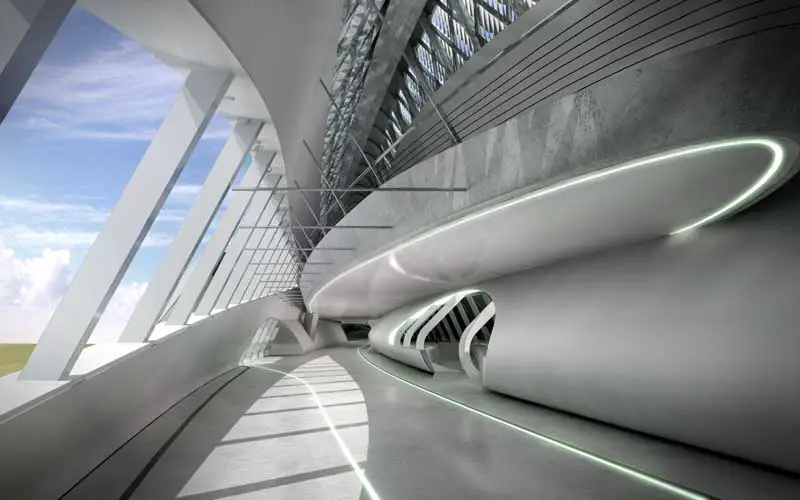
The British star architect Zaha Hadid has chosen glass fibre reinforced concrete from the Austrian company Rieder to envelope the 275 meters long "Zaragoza Bridge Pavilion", the new symbol of the Expo 2008 in the northern Spanish Zaragoza: she has covered the outer skin of the building with 29.000 triangles in different grey shades out of fibreC. The new bridge across the river Ebro is entrance to the Expo area and at the same time multi-level exhibition area; 10.000 visitors per hour will frequent the Main Pavilion of the world exhibition.

From 14 June to 13 September 2008 Zaragoza, in the northern Spain, will host the next international EXPO. More than seven and a half million people are expected to visit over 3,400 performances staged during the three months of the world exhibition. Due to the theme of the EXPO 2008 "Water and Sustainable Development", worldwide interest is guaranteed in times of climate changes, tsunami and catastrophic drought. Especially the new landmark of Zaragoza, the shining main pavilion, which is a bridge over the river Ebro at the same time - designed by the prestigious architect Zaha Hadid together with Ove Arup Engineers London - is supposed to cause surprise around the world.


Zaragoza Bridge
Zaragoza Bridge
Zaragoza Bridge
Zaragoza Bridge
Zaragoza Bridge
Zaragoza Bridge
Zaragoza Bridge

Read more...

Zaragoza Airport

The Spanish airport has opened its gates in time for water and sustainability festival
Zaragoza is receiving an architectural make-over in the run-up to Expo Zaragoza 2008 festival. The festival is the biggest water and sustainable development festival in the world and is one of a series of International Expositions since 1851 producing landmarks worldwide including the Eiffel Tower. Expo Zaragoza, which starts on the 14th June, is expected to be so big they have had to build a new airport to cope with the attendance. Having been designed and built in just 3 years the new €40 million Zaragoza Airport, designed by Vidal y Asociados arquitectos is now fully fuctional providing ‘a new gateway to Europe’.

The terminal covers 11,000 sq m of floor space and is designed to respond to an increase in the international inflow generated by the Expo and to open up Zaragoza as a tourist destination.

Zaragoza Airport
Zaragoza Airport
Zaragoza Airport
Zaragoza AirportThe building is composed of 11 modules, set in an alternative pattern in such a way that it resembles water movement, appropriate to the airports original purpose. The design stands out for its functionality and responds to three basic principles: flexibility, articulation and openness. The modular structure will allow growth into necessary areas, the layout allows for a sequential flow of passengers and the maximisation of natural light encourages openness. The external of the airport has also been landscaped preserving the maximum of green areas circumscribing the Terminal.

Expo Zaragoza has also seen a Zaha Hadid-designed bridge, which will be officially opened on the 13th June, added to the landscape. Following the exposition, Zaragoza itself will continue to undergo a transformation with building works taking place throughout the city. Following the International Exhibition the conference centre will be turned into a 160,000 sq m business park designed by Estudio Lamela and the Master de Ingeniería y Arquitectura studio.
Zaragoza Airport
Zaragoza Airport
Zaragoza Airport

The Spanish airport has opened its gates in time for water and sustainability festival
Zaragoza is receiving an architectural make-over in the run-up to Expo Zaragoza 2008 festival. The festival is the biggest water and sustainable development festival in the world and is one of a series of International Expositions since 1851 producing landmarks worldwide including the Eiffel Tower. Expo Zaragoza, which starts on the 14th June, is expected to be so big they have had to build a new airport to cope with the attendance. Having been designed and built in just 3 years the new €40 million Zaragoza Airport, designed by Vidal y Asociados arquitectos is now fully fuctional providing ‘a new gateway to Europe’.

The terminal covers 11,000 sq m of floor space and is designed to respond to an increase in the international inflow generated by the Expo and to open up Zaragoza as a tourist destination.

The building is composed of 11 modules, set in an alternative pattern in such a way that it resembles water movement, appropriate to the airports original purpose. The design stands out for its functionality and responds to three basic principles: flexibility, articulation and openness. The modular structure will allow growth into necessary areas, the layout allows for a sequential flow of passengers and the maximisation of natural light encourages openness. The external of the airport has also been landscaped preserving the maximum of green areas circumscribing the Terminal.

Read more...

Barcelona Spain

Barcelona, Spain's second largest city, and the 2,000 year-old capital of Catalunya, is a thriving port town with an excellent year-round climate, a cosmopolitan attitude, and enough art, architecture, nightlife and gastronomical delights to satisfy travelers of all ages and budgets. Indeed, if you are planning to travel Spain Barcelona should not be missed.
Barcelona Spain was the seat of a vast Mediterranean empire when Madrid was one-horse outpost on the sweltering Spanish steppe. Since 133 BC, the Romans, Visigoths, Franks and Moors have all, at one time or another, controlled Barcelona. The city grew increasingly more powerful throughout the middle ages. In 1561 the more centrally located city of Madrid became the seat of the Spanish Royal court, though well into the eighteenth-century Barcelona enjoyed special privileges and autonomy in the Catalunyan region.

Though it has a population of over three million, Barcelona Spain feels much smaller and more accessible. For the wandering tourist,Barcelona attractions are easily seen on foot.
Barcelona is comprised of four main districts: Ciutat Vella or the Old City, El Barri Gotic or the gothic quarter, La Ribera (the waterfront area), and El Raval, the outskirts southwest of the Rambla. Like Madrid's Gran Via, La Rambla is Barcelona"s main thoroughfare, and among the best Barcelona attractions. La Rambla bisects Barcelona"s Old Town, and is a perfect first stop for tourists looking to familiarize themselves with the city.
After a walk down La Rambla, and a stop at the nearby Boqueria Market, head to the Gothic Quarter to see the Catedral de la Seau. Other Barcelona Attractions include a stop at Antoni Gaudi"s unfinished architectural master piece, the Sagrada Familia. In color and texture this towering cathedral resembles a sand castle that has been smoothed over by a wave, or perhaps a sculpture of ice that is slowly melting away.
After a day trip through downtown, make your way up to Parc Guell. Also designed by Gaudi, this park overlooking downtown Barcelona was originally designed as a residential compound, though only two houses were every built on the site. Nonetheless, the twisted ceramic benches, towering pillars, warped sidewalks and multicolored tiles lend an Alice-in-Wonderland feel to this most original of Barcelona attractions.


After a long day of hoofing across Barcelona, the hungry traveler should look for some authentic Catalan food. The Mediterranean diet of virgin olive oil, seafood, onions, garlic and red wine is as mainstay in Barcelona. Typical entrees include habas a la catalana, a spicy bean stew, and pinacas a la catalana (spinach with pine nuts, raisins and bacon). If you travel to Barcelona, wines are one thing that will temp you again and again. The nearby Penedes region produce an especially tasty local sparkling white wine known as cava—not to be confused with the Fijian liquor of the same name—that is best enjoyed while sitting at a sidewalk café and marveling at all the Barcelona attractions you've seen, and all you have left to explore.


Barcelona is comprised of four main districts: Ciutat Vella or the Old City, El Barri Gotic or the gothic quarter, La Ribera (the waterfront area), and El Raval, the outskirts southwest of the Rambla. Like Madrid's Gran Via, La Rambla is Barcelona"s main thoroughfare, and among the best Barcelona attractions. La Rambla bisects Barcelona"s Old Town, and is a perfect first stop for tourists looking to familiarize themselves with the city.
After a walk down La Rambla, and a stop at the nearby Boqueria Market, head to the Gothic Quarter to see the Catedral de la Seau. Other Barcelona Attractions include a stop at Antoni Gaudi"s unfinished architectural master piece, the Sagrada Familia. In color and texture this towering cathedral resembles a sand castle that has been smoothed over by a wave, or perhaps a sculpture of ice that is slowly melting away.
After a day trip through downtown, make your way up to Parc Guell. Also designed by Gaudi, this park overlooking downtown Barcelona was originally designed as a residential compound, though only two houses were every built on the site. Nonetheless, the twisted ceramic benches, towering pillars, warped sidewalks and multicolored tiles lend an Alice-in-Wonderland feel to this most original of Barcelona attractions.
After a long day of hoofing across Barcelona, the hungry traveler should look for some authentic Catalan food. The Mediterranean diet of virgin olive oil, seafood, onions, garlic and red wine is as mainstay in Barcelona. Typical entrees include habas a la catalana, a spicy bean stew, and pinacas a la catalana (spinach with pine nuts, raisins and bacon). If you travel to Barcelona, wines are one thing that will temp you again and again. The nearby Penedes region produce an especially tasty local sparkling white wine known as cava—not to be confused with the Fijian liquor of the same name—that is best enjoyed while sitting at a sidewalk café and marveling at all the Barcelona attractions you've seen, and all you have left to explore.

Read more...

Zaragoza

You think Zaragoza, you think… well, you may not think very much at all. But that might start to change as we approach June 14, when Spain’s fifth largest city hosts “the biggest water festival on earth.” That’s how organizers of Expo Zaragoza 2008 aim to get your attention (even though celebrants of Thailand’s New Year might beg to differ). Still, it’s a sexier, if not more controversial, way to sell a pow-wow dedicated to “water and sustainable development” — especially in a country now facing its worst drought in a century.

If we were to drink the promotional kool-aid, we’d tell you that the city of 700,000 is to welcome five, no six, actually make that seven million, visitors over the three-month convocation-slash-fiesta. If nothing else, this year’s expo (they’re held internationally every three years) should finally put Zaragoza on the map: this is, after all, the same itinerant event that came to Paris in 1859 and gave birth to the Eiffel Tower. Plus, if Zaha Hadid builds your town a new bridge, you can expect people to come.

Zaragoza
Zaragoza
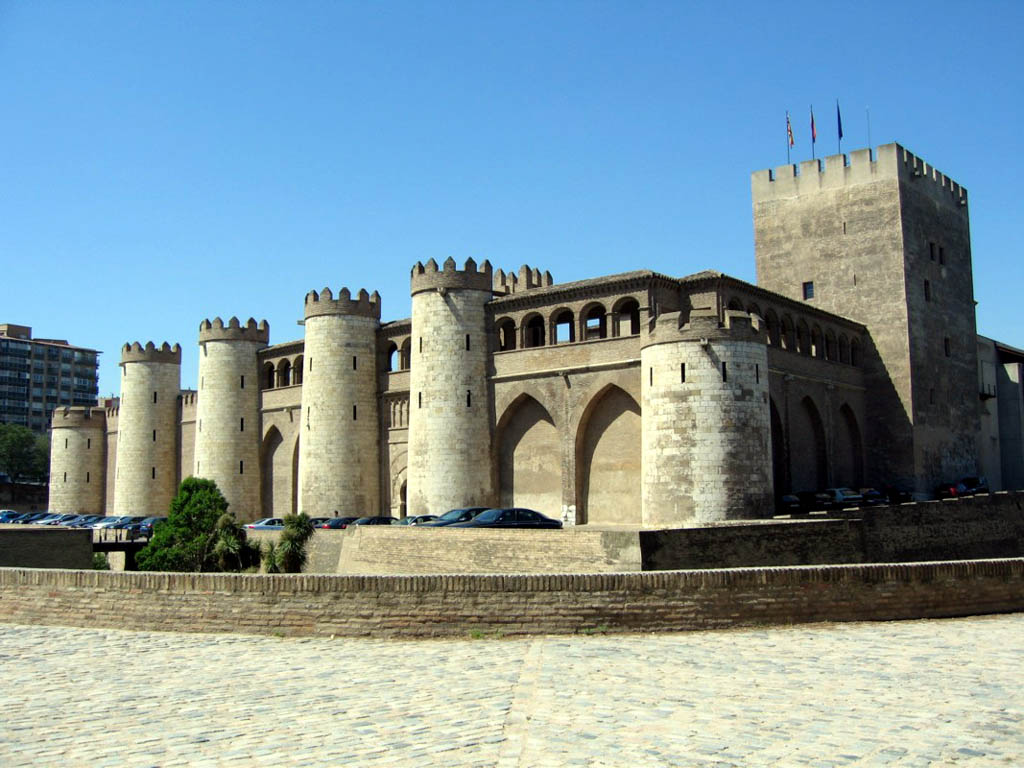
ZaragozaSet almost equidistantly between Spain’s three big cities — Madrid, Barcelona and Valencia — Zaragoza is now reachable by the new AVE high-speed rail link. And Hadid’s Bridge Pavilion (pictured) is what connects the city with the grounds of the Expo. The spectacular structure straddles the River Ebro, from which it takes its inspiration and form (think swirls of fiber-glass and concrete evoking a gladiola opening and closing). But as well as a footbridge, it will also double as an indoor exhibition space, and is likely to become a major landmark alongside Zaragoza’s UNESCO Heritage hits like San Pablo church and the Aljafería Palace.
Zaragoza

Zaragoza
Zaragoza
Expo 2008 will also unveil Europe’s largest freshwater aquarium, showcasing the world’s great rivers (say hello to Amazonian piranha, giant Nile crocodiles and Mekong snakes), as well as a 250-foot Water Tower (whose base is shaped like a water droplet). Bob Dylan — who’ll play live here on June 24 — has recorded a new version of Hard Rain, while Cirque de Soleil provides the daily entertainment with a new show, Awakening of the Serpent. That’s in addition to over 3,000 performances by other artists. Just as well, then, that the schedule is running on Spanish time: for 90 days straight, the party won’t wind down until 3am.

Read more...

Japanese Gardens in Japan

Japanese Gardens in Japan

Read more...